Review the contents
Move things that no longer belong. A small tray works best when each object has a reason to be there.
 MONOFORM
A place for small things.
More room for the work that matters.
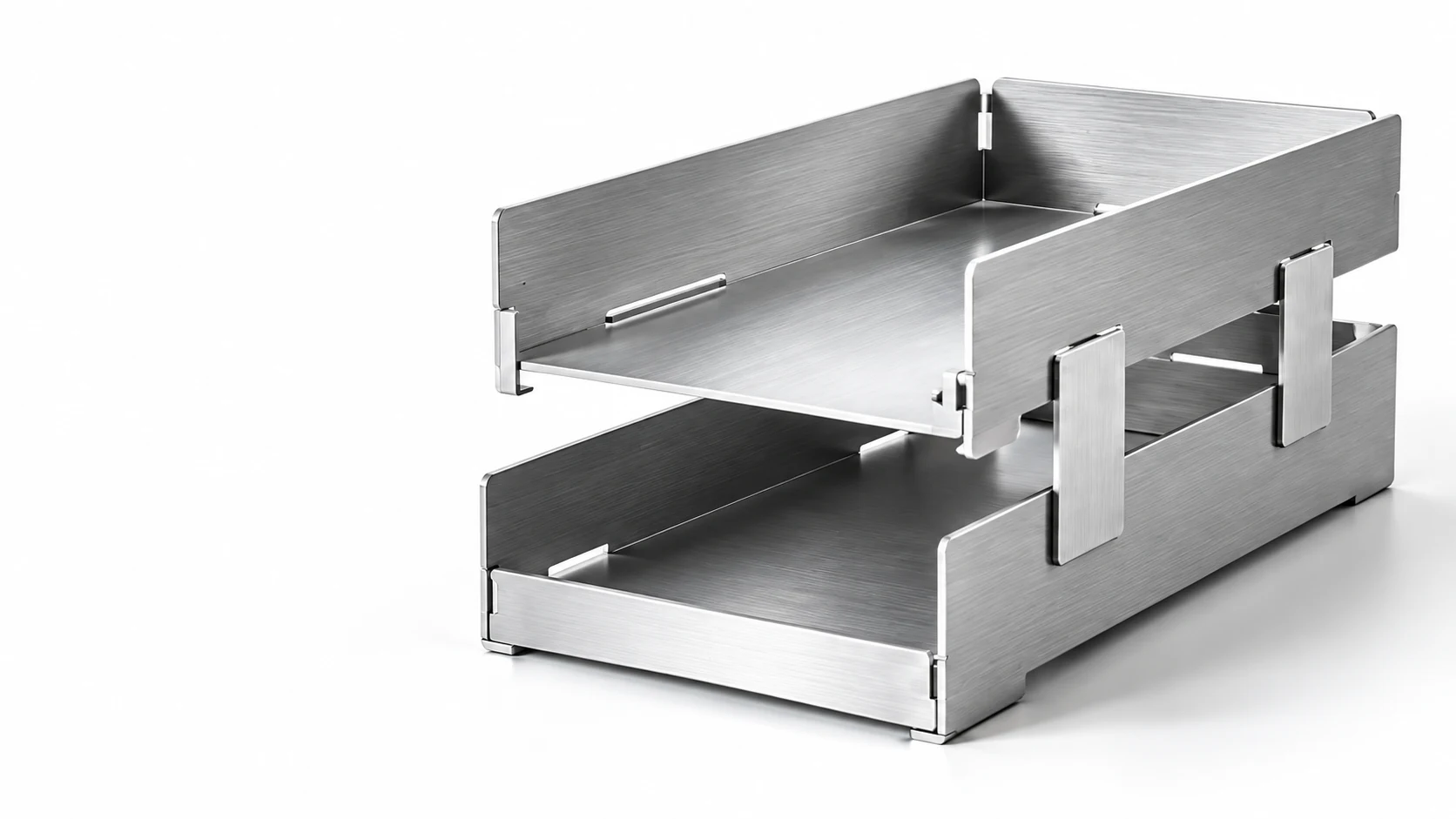
The plane that brings the arrangement together.
A simple edge, with a place for a connection.
A smaller space inside the larger one.
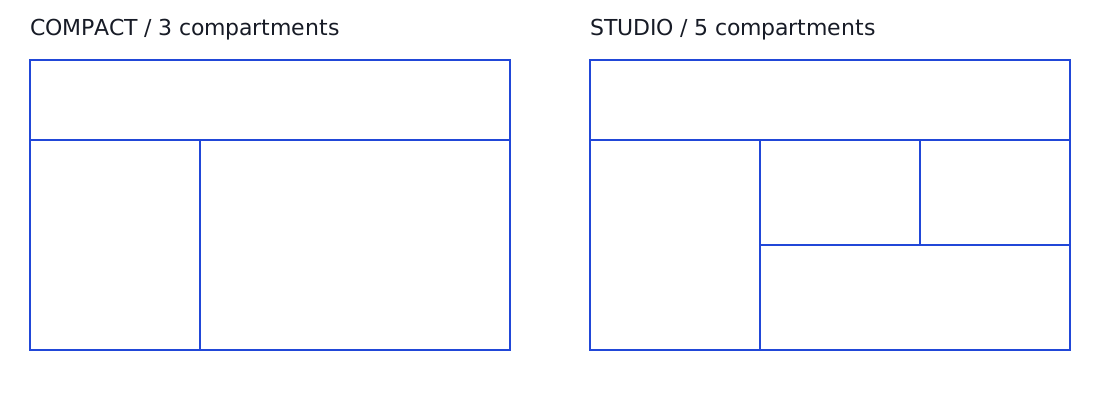
Two ways to organize the same essentials.
A long space for pens, a square space for small objects, and an open area for the things you reach for most.
Get the parts referenceStart with the objects you use every day.
Give similar things a shared place.
Separate small items from long tools.
Leave one space open for what comes next.
Fine lines soften the reflection of a broad metal surface. A folded edge adds definition without adding another visual element.
Look at the relationship between a flat plane, its edge, and the shadow below it.
| Space | Compact | Studio |
|---|---|---|
| Compartments | 3 | 5 |
| Long tools | One full-width row | One full-width row |
| Small objects | One open group | Three separate groups |
| Reading the layout | Broad and open | More finely divided |
Move things that no longer belong. A small tray works best when each object has a reason to be there.
Leave space around the arrangement so that reaching for one thing does not move everything else.
At the end of a session, bring each object back to its place.
Keep the parts list and a clean, editable drawing together.