
The opening
Follow the line that holds the empty space.
 SILT
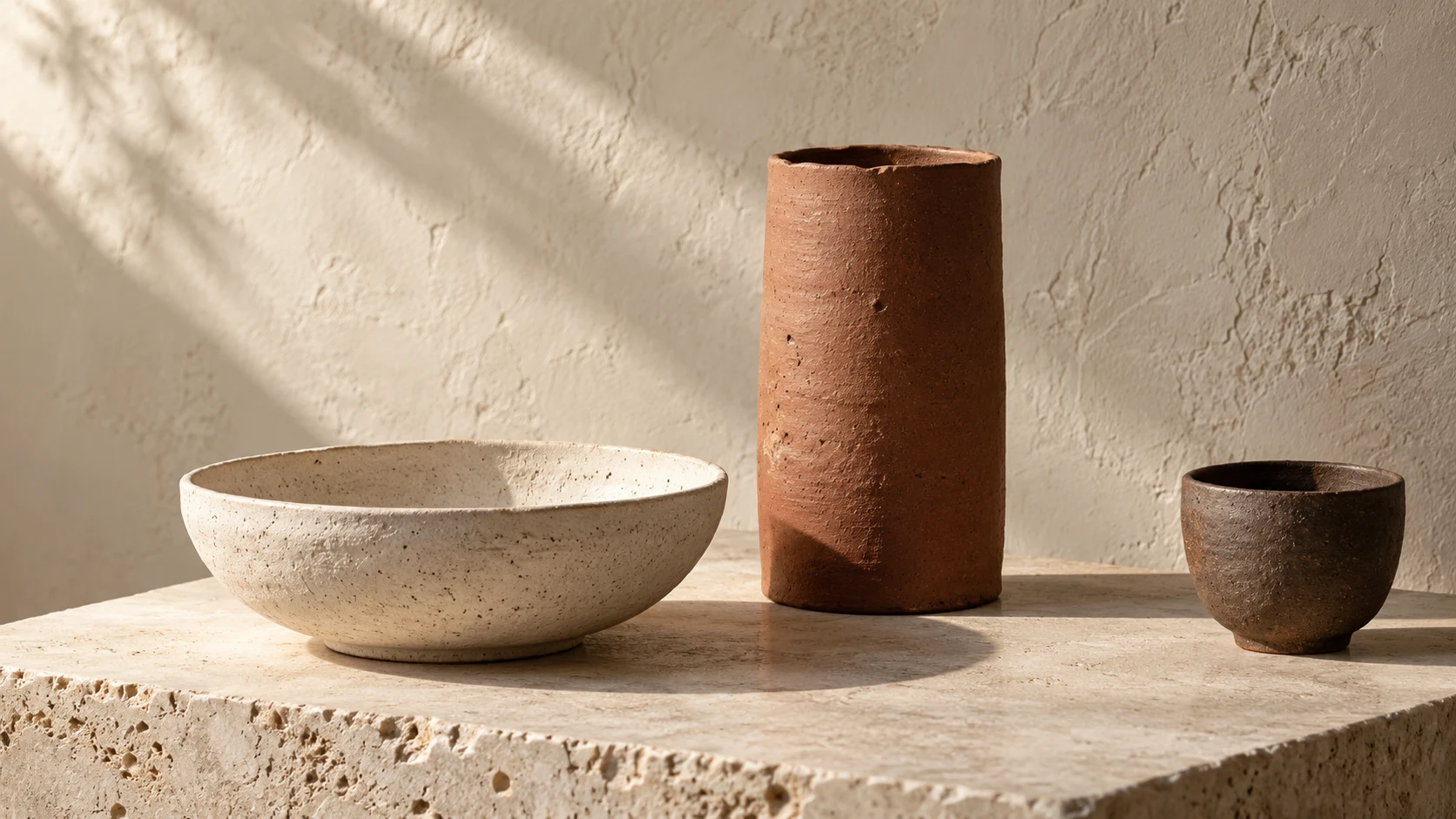
A rim that leans. A wall that catches light. A foot that lifts the whole form from the table.
Begin with what you can see, before looking for a name.
A simple coil study, read from the foot to the rim. Each layer gives the next one somewhere to sit.
Follow the line that holds the empty space.
Notice where the volume gathers and where it narrows.
Find the small edge between the vessel and the surface.
An open bowl gathers space. A tall cylinder holds a line. Neither needs to become the other.
Look for a mark left by touch. Describe its direction, depth and rhythm. A picture can suggest a surface; it cannot tell you everything about the material.
These are original visual studies for SILT. This collection does not offer products for sale.
It is a way to observe a shape. It is not a firing schedule, construction guide or material safety specification.